









Menu


Multi-language Webflow that scales as you add markets
We build sites that handle hreflang, locale-specific content, and the CMS workflows behind them, with the editorial flow that lets your team manage every market.


What we build for global teams

Locale architecture
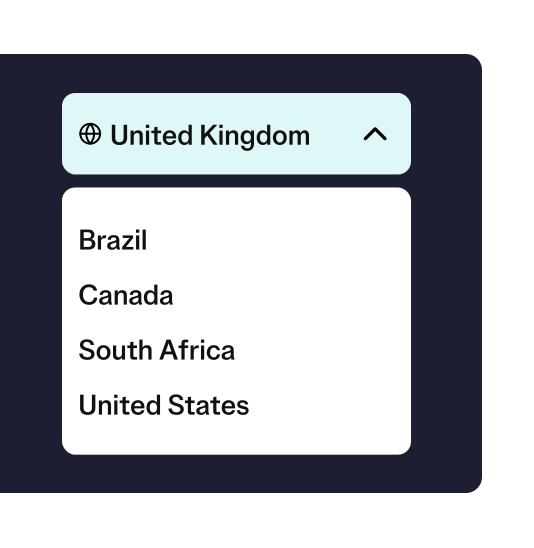
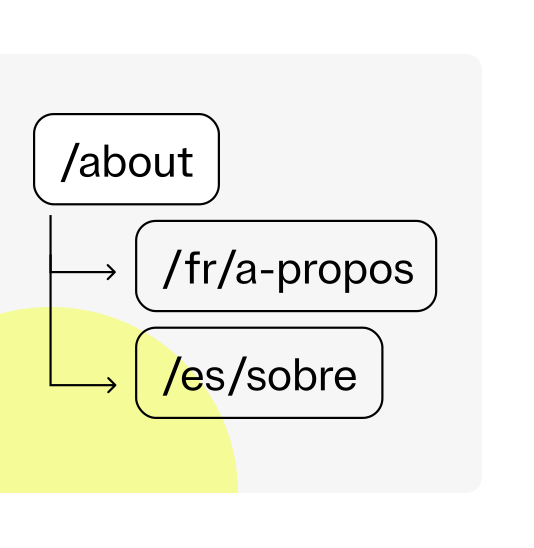
URL structure, hreflang tags, and locale routing built into the site from the start. Search engines find every version.

CMS for multi-language content
A CMS structure that holds the same page across multiple languages, with the editorial flow your team uses to publish. Reusable across any market you add later.

Locale-specific content for each market
When a market needs different products, different pricing, or different campaigns, the site holds all of it. Translation is one part of the build, with locale-specific content sitting alongside it.

Locale-specific tracking and analytics
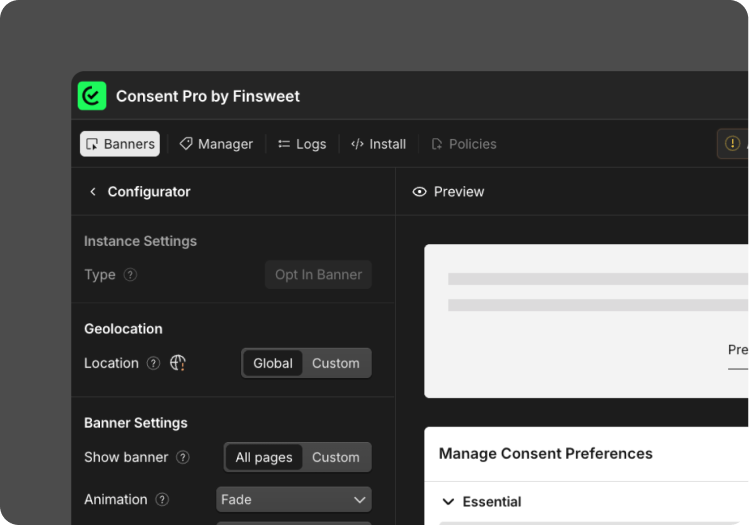
Tracking codes, consent banners, and analytics events that respect each market's rules, including the GDPR-specific work that European markets require.

Migration from a non-localized site
Moves from a single-language Webflow site, WordPress, or other platform into a multi-language Webflow setup. SEO carries through.
Webflow native localization or Weglot? We help you pick
There's no single right answer for every project. Webflow's native localization is the cleanest setup when the languages are stable and the team wants editing inside Webflow. Weglot is the right call when you need machine translation across many languages fast, or when the team isn't ready to manage every locale by hand.
We've shipped both. The first conversation maps your markets, your content team, and your timeline against the trade-offs. We come back with a recommendation that fits.
How the project works
We start by mapping the markets you need at launch and the markets coming next. From there, we plan the locale architecture, the CMS structure, and the localization tool. Then we build, with each market reviewed before it goes live.
For migrations, we map every existing URL to its localized equivalent and set redirects so search performance carries over.

Why teams pick Finsweet for multi-language Webflow
We're a full-time team that has shipped 500+ Webflow projects since 2017. We were building localized sites with Weglot before Webflow had native localization, and we shifted to Webflow native when it landed. That history is why we usually have a clear read on which tool fits your project before you even sign.
Many teams keep working with us after launch on hourly credits, especially when adding markets is part of the roadmap.
What clients have said about working with us


Multi-language Webflow FAQ
Should we use Webflow's native localization or Weglot?
It depends on the project. Webflow's native localization is best when the team wants to edit each locale inside Webflow and the language list is stable. Weglot is better when you need many languages fast, when machine translation is acceptable as a starting point, or when the team isn't ready to manage every locale manually. We help you pick during scoping.
What's hreflang and why does it matter?
Hreflang tags tell search engines which version of a page is meant for which language and region. Without them, Google often shows the wrong version to the wrong audience or treats your locales as duplicate content. We build hreflang into every multi-language site as a standard.
Can we have different content per market, not just translated copy?
Yes. The CMS is built so each locale can have its own products, pricing, case studies, or campaigns. The structure stays consistent so adding new markets later doesn't require rebuilding.
How does SEO work across languages?
Each language gets its own URL structure, hreflang tags, locale-specific metadata, and a sitemap entry. We also handle locale-specific tracking and consent so analytics stays clean per market.
We're migrating from a single-language site. Will we lose SEO?
Not if it's planned. We map every existing URL to a primary locale, set redirects for the others, and structure the new site so the original audience keeps landing on the right page.
How many languages can Webflow handle?
Webflow's native localization supports up to 10 locales on its Advanced plan. Weglot supports 110+. The right ceiling depends on the project. We talk through the cost and the workflow trade-offs before you commit.
What about machine translation?
Either or both. The marketing site runs on Webflow. When the project includes product UI work, like dashboards, signed-in pages, or onboarding flows, we extend into that on the right backend stack.
Can you migrate our existing site without breaking compliance pages or rankings?
Webflow's Advanced localization plan includes DeepL machine translation. Weglot has its own. Both produce drafts, not final copy. We build a workflow where machine translation is a starting point and human review is part of the publish step.
Can our internal team manage translations after launch?
Yes. We set up the CMS and the localization tool so editing happens where your team already works. We also document the workflow in the post-launch handoff.
How long does the project take?
Yes. We set up the CMS and tDepends on the number of locales, whether you're migrating, and the content workflow. We scope it in the first call and come back with a clear plan.he localization tool so editing happens where your team already works. We also document the workflow in the post-launch handoff.
How is Finsweet different from a typical Webflow agency for this kind of work?
We've been doing it longer. We were building localized Webflow sites before Webflow had native localization, which means we know the trade-offs of every approach and we've made the early-stage mistakes agencies are still making now.
Ready to talk through your localization project?
Tell us the markets you're launching in and the content you have ready. We'll come back with a clear scope and a recommendation on the right localization tool.
Do you need another service?
Website Redesign
B2B and enterprise website redesigns on Webflow. Strategy through launch, without losing what's already ranking.
Figma -> Webflow
Pixel-perfect Figma to Webflow builds with responsive behavior, CMS structure, and SEO.
Webflow Maintenance
Ongoing Webflow site care, billed by the hour with no retainer.