









Menu


A full rebrand and Webflow relaunch in 12 weeks, live for Iceotope's biggest week of the year
Client
Iceotope Technologies
Industry
Precision liquid cooling for AI and HPC
Engagement
Brand, site design, Webflow migration
Timeline
December 11, 2025 to March 3, 2026

OVERVIEW
Iceotope makes precision liquid cooling for AI and HPC infrastructure, and its brand still said something else entirely: a penguin logo, neon green, and a site the team could not update without help. Twelve weeks after signing with Finsweet, Iceotope had a new identity, a new Webflow site, and a migration completed in time for Mobile World Congress. Ten weeks after launch, the company announced a $26M Series B on that new site.

2005
Founded in Sheffield, UK
219
Patents granted andp ending
40%
Less power per
kW of IT
kW of IT
96%
Less water per
kW of IT
kW of IT
COLLABORATES WITH
12
weeks
From signed contract to livesite: December 11, 2025 toMarch 3, 2026.
≈20
pages
Around 20 pages and 8 CMS collections shippedat launch, including fullcontent migration
6-8
industries
6 industry pages atlaunch, 8 today, addedthrough the CMS withoutnew design ordevelopment work
$26m
Series B announced 10 weeksafter relaunch, on the new site.
The momentum, the patents, and the partnerships. But not the brand.
Iceotope Technologies is a UK-founded pioneer in precision liquid cooling. Started in Sheffield in 2005 as a green-computing research venture, the company now holds 219 granted and pending patents and collaborates with Dell, HPE, Intel, and Meta. Its sealed-chassis cooling captures heat directly from GPUs, CPUs, memory, and power supplies, cutting power use by 40% and water use by 96% per kW of IT equipment power.
By late 2025, Iceotope was heading into the AI infrastructure boom with the momentum, the patents, and the partnerships, but not the brand. Buyers evaluating liquid cooling for AI datacenters were landing on a website that looked nothing like the company they were about to meet.
the challenge
A brand that predated the AI era
We have this name and this logo, which don't really fit what we do.
The logo was a literal penguin, a leftover from an era when liquid cooling meant Antarctic imagery. The palette was a harsh neon green. The website ran almost entirely in black, white, or green, led with a cycling hero carousel that showed different visitors different messages, and buried the company's strongest proof points under long blocks of copy. The resources library's filters did not work.
The deeper problem was operational. The marketing team could not update the site themselves, so every change waited on outside help. And the deadline was immovable: Iceotope had a major presence booked at Mobile World Congress, March 2 through 5, with new products to announce. "I'd love to have us looking our very best," the VP of Marketing told the team. The company also wanted its environmental story told properly: its dielectric coolant is biodegradable, "good for the earth," and that message was invisible in the old brand.
A new brand identity
A redesigned site
A migration to Webflow
Discovery & Strategy
Position the brand for the buyer, not theproduct
Our designer opened the engagement with a working session on day one and a full sitemap proposal by the end of that week. Two strategic decisions shaped everything after.
First, the brand would move from cold to thermal.
Instead of ice and penguins, the identity expresses what the technology actually does: move thermal energy. Built around the zeroth law of thermodynamics, the physics of bodies reaching thermal equilibrium, it became a logo of connected forms, heat-map gradients in a new palette, and an icon system styled after server indicator lights. A trace of the legacy green stayed deliberately, so two decades of brand equity carried through.
ICE AND PENGUIN

THERMAL ENERG
Second, the site architecture would be rebuilt around buyer questions rather thaninternal categories.
The old scattered structure (separate Investors, Labs, News, Insights, Resources, and Learning Hub pages) consolidated into a clear system: one Company page, one Technology section, one merged Resources hub with working filters, and template-driven pages for products and industries. Templates meant Iceotope could launch with six industries and add more later without commissioning new design, which is exactly what happened.
INVESTORS
labs
news
INSIGHTS
RESOURCES
LEARNING HUB
COMPANY
TECHNOLOGY
RESOURCES HUB
PRODUCT + INDUSTRY TEMPLATES
the solution
An identity system and a site built to be run by marketing
The brand shipped as a complete system: logo suite in every format including print-ready CMYK, a palette of blue-tinted neutrals with green, purple, and pink pillars, typefaces chosen for a more precise, engineering-grade feel, a custom icon set, and a full visual guidelines book delivered as a PDF and an editable Figma Slides deck. When a competitor's similar animal mark surfaced mid-project, the client's team noted they had changed the logo at the right time.
“AI is heating up. We keep it cool.”
The site design leads dark, with the new gradients used sparingly for emphasis. The homepage opens on the line "AI is heating up. We keep it cool," with a liquid-fill text animation and indicator-light icons that flicker on like hardware booting. A product video expands as the visitor scrolls, an exploded-view diagram of the cooling chassis opens on scroll, and the site-wide "Ready to talk?" call to action grows from a scrolling marquee into a full contact panel. Every animation was reviewed against performance budgets before it stayed.
BEFORE · THE OLD BRAND
AFTER · LIVE ON WEBFLOW
Design approval came four weeks after kickoff (“design-wise we are approved!”), theclient's CEO gave the build go-ahead the following
week, and our developer startedthat same week from a recorded
design-to-development handoff covering everypage, component, and interaction.
DEC 11
Contract signed
The 12-week clock starts
DEC 16
Kickoff, day oneworking session
Full sitemap by end ofweek one
JAN 14
Design aproved
“Design-wise we are approved!”
JAN 22
CEO go-ahead, buildstarts
Recorded design-to-devhandoff
MAR 3
Live, during MWCweek
MWC ran March 2 to 5
MAY 14
$26M Series Bannounced
Ten weeks after relaunch
Client-First,
CMS depth, and
a clean migration
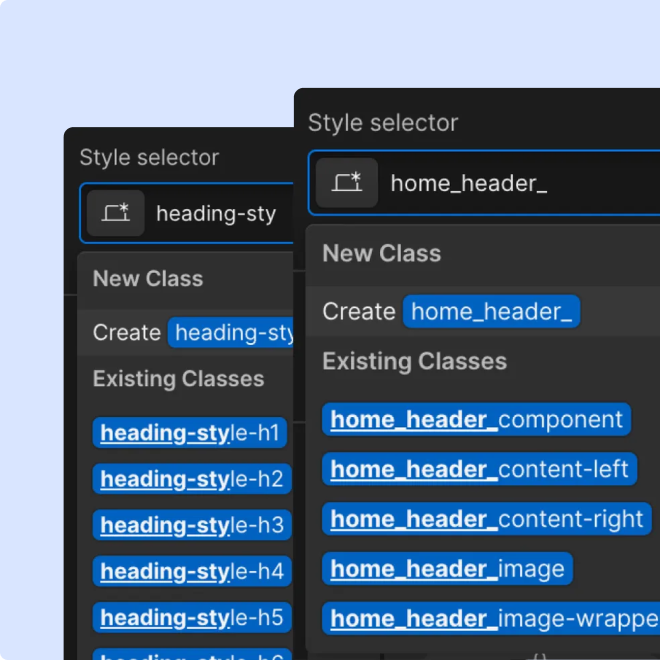
Our developer built the site on Client-First, Finsweet's Webflow development methodology, with a style guide and a reusable component library, so the client's team can assemble on-brand pages rather than request them. Eight CMS collections shipped at launch: Resources, News, FAQs, Careers, Team, Authors, Industries, and product Datasheets. Resource posts carry configurable calls to action per content type, so a whitepaper page offers a download while a blog post routes to contact, and related posts can be hand-picked per article.

CMS COLLECTIONS AT LAUNCH
Resources
News
FAQs
Careers
Team
Authors
Industries
Datasheets
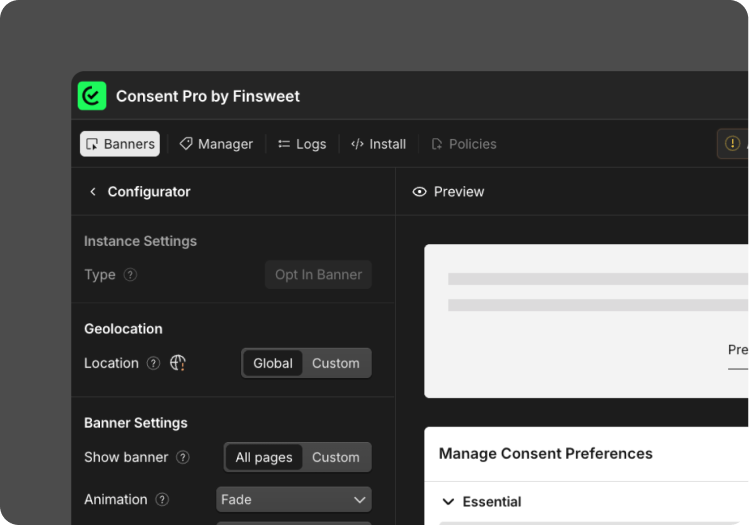
Integrations were kept practical: Webflow forms flow into HubSpot through tested automations, Google Analytics loads only after consent, and a LinkedIn Insight Tag supports the client's paid campaigns. Cookie consent runs on Consent Pro, Finsweet's consent management product, which Agency clients receive as part of their project; our designer built a custom consent modal to match the new brand rather than shipping a stock banner.
The migration itself was treated as its own workstream. Working alongside Iceotope's SEO agency, our developer consolidated the old URL structure, wrote wildcard-based 301 redirects, coordinated pre- and post-migration technical reviews, and moved the finished project into Iceotope's own Webflow workspace so the client owns everything.
Launch night delivered the project's hardest hours: the client's domain registrar dropped a DNS record and propagation stalled, and our developer stayed on with the client until nearly 2 AM to trace the configuration and clear the path. The site went live March 3, during MWC week, two days behind the March 1 target and entirely due to registrar-side DNS delays.
MAR 01
Target launch date.
MAR 02
The client's domain registrar drops a DNS record. Propagation stalls.
~02:00
Our developer, still on with the client at nearly 2 AM, traces the configuration and clears the path.
MAR 03
iceotope.com is live, during MWC week. Two days behind target, entirely registrar-side.
results
A launch the client's team now runs itself
The clearest outcome is who updates iceotope.com today: Iceotope does. The marketing team publishes blog posts and news through the CMS, swaps team photos, edits page copy in Content Editor mode, and toggles the homepage announcement banner, all without touching a developer queue. Finsweet recorded CMS walkthroughs and ran live Webflow and Figma training sessions to make that stick.

Finsweet split the consolidated product page into dedicatedpages
Added author profile pages
Built a patent listing system the client's legal team requested
Two new industry pages, Defense and Security, went livethrough the CMS template
A second design phase (applications pages, a partnershippage, and a comparison page) is in staging now
When Iceotope renamed its products (KUL BOX became Edge,KUL AI became Compute), the site followed within days
What clients have said
about working with us